Views: 0 Author: Site Editor Publish Time: 2026-06-03 Origin: Site
Upgrading from residential cleaning equipment often triggers a frustrating sizing dilemma for facility operators. Standard shop vacuums require constant manual emptying. They quickly disrupt workflow during high-demand shifts. Conversely, massive industrial units exceeding 60 liters pose serious mobility challenges. They demand dedicated ramps, specialized transport carts, and excessive storage space in janitorial closets.
This creates a significant operational gap in the market. The 35L capacity, roughly equivalent to 9 gallons, emerges as a pragmatic middle ground. Facility managers, specialized contractors, and heavy-duty workshop operators rely on it daily. It offers enough internal volume to tackle substantial liquid spills without sacrificing agility. You can navigate tight warehouse aisles and crowded job sites effortlessly.
Our goal is to objectively evaluate the practical applications and operational limits of this equipment. We will explore essential selection criteria and performance metrics. You will learn how to choose the right model to ensure it perfectly aligns with your specific site requirements.
Optimal Footprint-to-Capacity Ratio: A 35L unit holds enough volume to handle significant spills or long shifts without sacrificing maneuverability in tight aisles or job sites.
Material Matters: The choice between a poly-drum and a 35L stainless steel vacuum dictates chemical resistance, durability, and total unit weight.
Drainage is Non-Negotiable: At full liquid capacity, 35 liters of water weighs roughly 35 kg (77 lbs). Evaluation must prioritize built-in drain ports over tilt-to-dump models.
Filtration Matching: Selecting the right unit requires matching the filtration system (HEPA, cartridge, foam) directly to the primary application (fine dust vs. bulk liquid).
Commercial spaces demand relentless efficiency. Small 15-liter units cause frequent work stoppages. Workers must stop their tasks constantly to empty the small tank. These interruptions waste valuable labor hours over a week. On the other end of the spectrum, 60-liter to 80-liter units create severe logistical drag. They are remarkably heavy and cumbersome. Large industrial units require specialized ramps for van transport. They demand dedicated storage rooms. They also draw significantly more electrical power from standard outlets.
A 35L wet dry vacuum cleaner solves this precise sizing dilemma. The chassis typically fits on standard utility carts alongside mop buckets. You can push it through standard commercial doorways easily. It captures enough debris to last through a standard maintenance shift. You get the perfect balance of physical mobility and internal volume.
Consider the cost-to-utility ratio carefully. These mid-sized units generally utilize commercial-grade bypass motors. You will find these identical robust motors inside much larger machines. However, a 35L model comes at a highly accessible price point. This maximizes your return on investment. Mid-sized operations gain professional suction power without absorbing the heavy industrial price tag.
Rapid deployment is crucial during facility emergencies. A sudden burst pipe or tracked-in winter slush demands immediate action. You need a reliable large capacity wet dry vacuum to extract localized flooding quickly. High CFM (Cubic Feet per Minute) ratings are necessary here. High CFM means faster liquid extraction. Rapid water removal prevents permanent structural damage to your commercial floors. It also reduces slip-and-fall liabilities in public spaces.
Active job sites generate hazardous fine particulate matter. Drywall dust, sawdust, and concrete silica dust threaten respiratory health. Managing this airborne debris is a major operational challenge. You need specialized features to handle it safely. Look for built-in PTO (Power Take-Off) sockets. They allow power-tool synchronization. When you turn on your sander, the vacuum starts automatically. Automated filter-cleaning mechanisms are also essential. They shake off fine dust automatically using reverse airflow. This prevents suction loss during continuous daily operation.
Professional detailing requires maneuvering around large vehicles and crowded workbenches. A 35L unit excels in these tight workshop spaces. Long, crush-proof hoses are vital for reaching awkward spots under car seats. You also need specialized tooling to maximize efficiency. Crevice tools and upholstery brushes make deep cleaning possible. These robust accessories transition seamlessly between dry debris collection and wet shampoo extraction.
Choosing the correct tank material remains critical for longevity. The decision impacts physical durability, total weight, and chemical resistance. Let us compare the two primary material options for your next commercial floor vacuum.
A 35L stainless steel vacuum offers exceptional mechanical durability. It provides natural static dissipation. This makes it safer for collecting certain dry dust types. It also delivers a clean, professional aesthetic for client-facing environments. However, it is slightly heavier. It remains vulnerable to cosmetic denting upon impact.
Polypropylene (plastic) is best for harsh chemical environments. It will never rust or corrode over time. It resists severe dents remarkably well. Plastic tanks are also much lighter overall. This structural advantage makes them ideal for multi-story transport.
Feature Dimension | Stainless Steel Tank | Polypropylene (Plastic) Tank |
|---|---|---|
Mechanical Durability | High (Prone to cosmetic denting) | High (Highly dent-resistant) |
Chemical Resistance | Moderate (Vulnerable to harsh acids) | Excellent (100% Rust-proof) |
Total Unit Weight | Heavier (Adds physical fatigue) | Lighter (Easier stair transport) |
Static Dissipation | Excellent (Prevents dust clinging) | Poor (Requires special grounding) |
Understanding marketing metrics versus real performance helps you make smart choices. Peak HP (Horsepower) is largely a theoretical marketing metric. It does not reflect sustained operational cleaning capability. Instead, you must evaluate Water Lift and CFM. Water Lift measures sheer static suction strength. It dictates how well the machine pulls heavy liquids. CFM measures pure airflow volume. It dictates how efficiently the machine captures airborne airborne dust.
You must prioritize independent bypass cooling motors. A bypass motor physically separates clean cooling air from dirty vacuumed air. This critical design prevents motor burnout during extended liquid extraction tasks. It is a mandatory architectural feature for commercial longevity.
Lifting heavy equipment poses significant ergonomic risks to your staff. Thirty-five liters of liquid weighs approximately 35 kilograms. Lifting this dense weight is a severe workplace hazard. You must mandate bottom-mounted drain ports. Alternatively, look for integrated pump-out features. These smart mechanisms allow safe, strain-free liquid disposal directly into floor drains. Never rely on basic tilt-to-dump models for full 35L liquid capacities.
Proper filter management prevents catastrophic motor failure. Using standard dry pleated filters for a wet suction vacuum task constitutes a complete operational failure. Water destroys paper filters instantly. It turns dust into thick mud inside the housing. You must establish strict standard operating procedures (SOPs) for your maintenance staff.
Staff must swap to specialized foam sleeves before extracting liquids. For fine drywall dust, they must utilize tear-resistant fleece bags. Implementing these simple SOPs extends equipment life significantly.
Best Practice: Keep a clearly labeled storage bin for dry filters near the equipment station.
Common Mistake: Leaving a wet foam filter inside the unit during dry pickup. This traps dirt and destroys suction power.
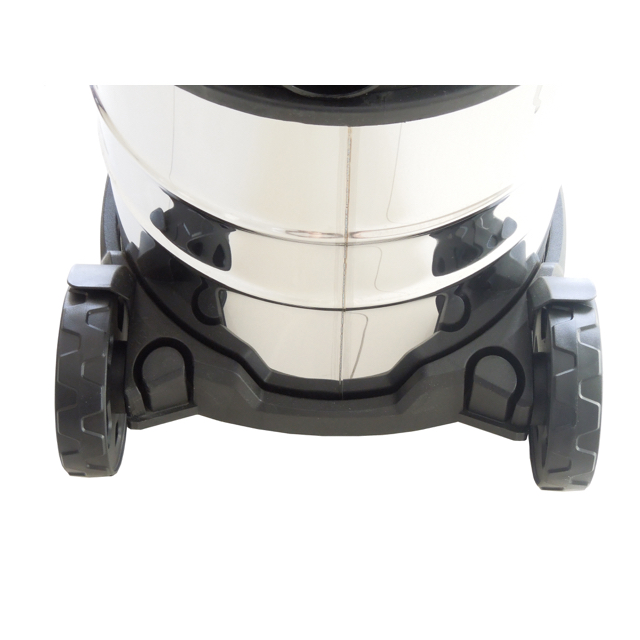
Tall and narrow 35L machine designs face center of gravity challenges. They can easily tip over when pulled sharply by the hose. A tipped machine spills dirty water across clean floors. You must evaluate the caster wheel base width carefully. A wider physical base provides vastly superior stability. Check the structural integrity of the transport cart. A low center of gravity prevents frustrating spills during rapid transport.
Acoustic output requires careful consideration before purchase. Large capacity cleaning units easily exceed 80 decibels (dB). Organizations like OSHA monitor workplace noise exposure strictly. You must highlight the absolute need for models featuring acoustic dampening. This is especially true if you operate in occupied professional spaces. Hotels, corporate offices, and schools demand low-noise equipment to prevent daytime disruptions.
Navigating the complex commercial market requires a structured approach. Use this simple shortlisting logic to finalize your procurement strategy.
Step 1: Define the Primary Ratio (Wet vs. Dry)
Determine your primary daily use case. If your tasks are 80% wet extraction, prioritize bottom drain ports. Select rust-proof poly tanks and seek high water-lift metrics. If your workload is 80% dry debris, prioritize strict HEPA compliance. Choose stainless steel tanks and prioritize high CFM ratings for rapid dust capture.
Step 2: Assess the Operating Environment
Evaluate exactly where the unit will travel daily. Determine if it must navigate multi-story stairs. Stair climbing requires large rear wheels and a sturdy steel push handle. If the unit remains strictly on a flat warehouse floor, a standard 4-caster wheel design is entirely sufficient.
Step 3: Factor in Consumable Availability
A vacuum is truly only as good as its filtration network. Proprietary filters cause massive operational bottlenecks. Shortlist equipment brands offering readily available consumables. You need cost-effective replacement bags, standard utility hoses, and highly accessible HEPA filters.
A 35L wet dry vacuum represents a highly targeted operational tool. It is not a universal silver bullet for every imaginable cleaning challenge. To maximize its daily value, you must balance raw capacity with practical physical constraints. Follow these actionable steps to ensure a successful equipment deployment:
Audit your facility requirements: Identify your primary spill and debris types clearly before finalizing any procurement list.
Balance capacity and safety: Match the internal tank size with the physical realities of the staff operating it. Prioritize drainage ports to mitigate severe lifting hazards.
Standardize internal filter swaps: Train your team rigorously to properly transition between wet and dry filters. This protects the bypass motor from premature failure.
Verify local consumable access: Ensure replacement bags, foam sleeves, and hoses are easily sourced from reliable local or online vendors.
A: A full 35L tank holds roughly 35 kg (77 lbs) of water, plus the weight of the machine itself. Lifting this massive weight represents a severe ergonomic hazard. This emphasizes the absolute necessity of a built-in drain port to prevent workplace lifting injuries. You should always empty the tank using the bottom drain or an integrated pump.
A: No. While stainless steel provides high durability against physical impact and standard water, it has chemical limitations. Highly acidic, alkaline, or corrosive industrial chemicals can pit or degrade standard stainless steel tanks over time. Polypropylene (plastic) tanks are strongly recommended for environments dealing directly with harsh chemicals.
A: Yes. Standard paper or HEPA-rated cartridge filters will instantly ruin if they become soaked. Operators must remove dry filters before wet extraction tasks. You must install a specialized wet foam sleeve instead. This simple procedural step protects the internal bypass motor from moisture and airborne debris during liquid cleanup.