Views: 0 Author: Site Editor Publish Time: 2026-10-20 Origin: Site
Cleaning fine, potentially warm ash demands specialized equipment to prevent dangerous hazards. Many homeowners mistakenly use standard shop vacuums for this chore. However, conventional tools are unsafe and ineffective for fireplace ash. They risk hazardous dust leaks, rapid motor burnout, or even sudden fires. Once you commit to buying a dedicated ash vacuum, a distinct choice emerges. You must weigh the true mobility of a cordless unit against the continuous power of an electric model. This article provides an objective, evidence-based comparison of both types. We will explore performance metrics, safety standards, and practical ergonomics. You will learn how to properly match the right tool to your specific heating setup and usage frequency. Whether you run a large woodstove or a small pellet heater, this guide clarifies the selection process. Let us examine the defining differences so you can make an informed, safe decision for your home.
Mobility vs. Runtime: Cordless models offer unmatched convenience for outdoor fire pits and quick indoor touch-ups, but are limited by 15–30 minute battery cycles.
Consistent Suction: Electric models provide uninterrupted power, making them necessary for primary-heat woodstoves or large-capacity pellet stoves.
Total Cost of Ownership: A lithium-ion ash vacuum typically requires a higher initial investment and eventual battery replacement, whereas corded models are generally more cost-effective upfront.
Safety Non-Negotiables: Regardless of power source, both require metal canisters, heat-resistant hoses, and specialized fine-dust filtration systems.
You cannot use a standard household or garage vacuum to clean a fireplace. Ash particles behave differently than regular dirt or sawdust. They require purpose-built equipment to ensure safety and proper sanitation.
Wood ash consists of microscopic particles. These particles often measure less than one micron in diameter. Standard vacuum filters cannot trap debris this small. As a result, standard vacuums pull the ash through the intake and blow it directly back into your living room. This creates a severe indoor air quality hazard. You breathe in fine particulate matter, which damages lung tissue. Furthermore, this fine dust bypasses standard filters and enters the vacuum motor. Ash acts as an abrasive powder. It coats internal moving parts, destroys bearings, and causes rapid motor burnout. Dedicated ash vacuums solve this by utilizing specialized, multi-stage fine-dust filters.
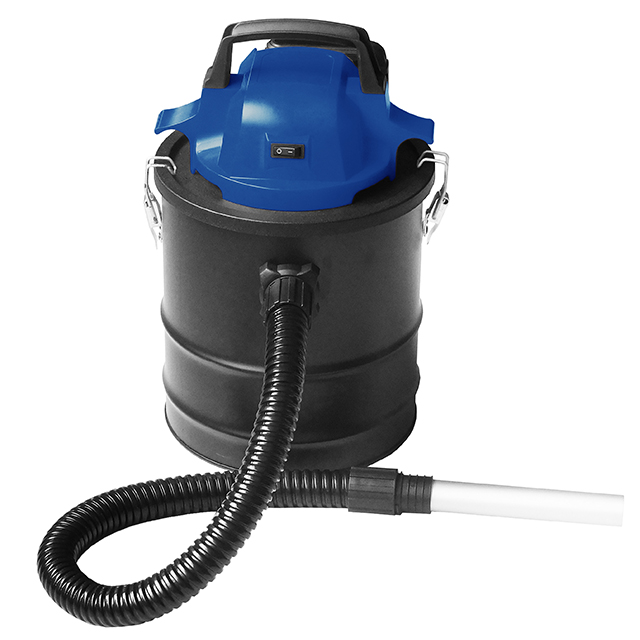
Fireplace ash retains heat for days. A pile of seemingly cold ash often hides live, smoldering embers deep inside. If you vacuum a live ember into a standard plastic shop vacuum, disaster follows. The rushing air from the vacuum feeds oxygen to the ember. The ember then ignites the dry debris already sitting in the plastic canister. A specialized ash vacuum prevents this through strict material choices. They feature metal canisters, metal-lined hoses, and aluminum nozzles. This heat-resistant construction safely contains hidden embers.
A successful ash vacuum purchase must meet three core requirements. First, it must provide absolute dust containment to protect your lungs. Second, it must offer total fire safety through metal construction. Third, it must simplify the emptying process. You should be able to dump the collected ash without creating a secondary mess on your floor. Both cordless and electric models aim to meet these criteria, but they do so differently.
The modern cordless ash vacuum cleaner transforms how homeowners handle fireplace maintenance. By removing the power cord, these devices offer exceptional freedom of movement.
Mobility stands as the primary advantage of a battery powered ash vacuum. You never trip over cords near a crowded hearth. You do not need to search for an available wall outlet. This freedom extends outdoors as well. You can effortlessly carry the unit to your patio to clean a charcoal grill, an outdoor fire pit, or a meat smoker. The absence of a cord dramatically speeds up small, routine cleaning tasks.
These units shine in specific scenarios. They are ideal as a cordless fireplace vacuum for weekend users who only burn wood occasionally. They also excel for navigating tight, awkward spaces around complex pellet stove installations. If your heating setup requires quick, daily dusting rather than deep, heavy extraction, cordless models provide superior convenience.
Despite their convenience, battery-powered units carry distinct limitations you must consider.
Battery Fade: Lithium-ion batteries degrade over time. After several hundred charge cycles, the total runtime will decrease. Additionally, cold temperatures severely impact battery performance. If you leave your vacuum in a freezing garage, the battery will drain faster and deliver weaker suction.
Capacity Limits: Manufacturers design cordless units to remain lightweight. Therefore, a typical portable ash cleaner usually holds only 3 to 5 gallons. This smaller canister requires much more frequent emptying compared to corded counterparts.
Electric ash vacuums represent the traditional workhorses of hearth maintenance. They draw continuous power from a standard wall outlet, prioritizing brute strength over portability.
The defining feature of a corded model is its unwavering performance. These machines deliver consistent, peak CFM (Cubic Feet per Minute) suction. The power remains identical from the moment you turn the unit on until you finish the job. You never race against a draining battery. You can spend thirty minutes meticulously detailing the intricate baffles of a large woodstove without losing any suction power.
Electric models dominate in high-volume environments. If your home relies on wood as the primary winter heat source, you need an electric model. Homes generating large piles of daily ash require heavy-volume cleaning. Corded units possess the motor strength and canister capacity to handle massive fireboxes efficiently.
Choosing an electric model introduces different logistical challenges into your cleaning routine.
Tethered Operation: You are permanently restricted by the cord length. Most models feature cords ranging from 6 to 15 feet. Dragging an extension cord around a furnished living room becomes cumbersome. Snagging the cord on furniture remains a constant annoyance.
Storage Footprint: Electric units typically feature much larger canisters. Sizes often range from 5 to well over 6 gallons. This bulky footprint demands dedicated floor space in a utility closet or garage.
To make the right choice, you must evaluate both types across specific operational categories. We break down the performance, ergonomics, and financial implications below.
Initial suction often feels similar between high-end cordless and corded models. However, consistency varies wildly. As a battery drains, a cordless model experiences a noticeable drop-off in suction power. The motor spins slower as the voltage dips. Conversely, corded models maintain absolute maximum suction indefinitely.
Filter clogging affects all ash vacuums equally. Fine ash cakes onto the filter surface rapidly. When a filter clogs, suction drops. However, corded models usually possess larger motors. This brute motor force compensates for a partially clogged filter much longer than a battery-powered motor can.
Physical handling dictates how often you will actually use the tool. Ergonomics play a massive role in user satisfaction.
Cordless models carry heavy battery packs. This concentrates weight near the motor head. However, their overall dimensions remain compact. Carrying a balanced cordless unit to the patio feels effortless. Electric models may lack a heavy battery, but their bulky metal canisters make them awkward. Dragging a large corded unit across a thick living room carpet often requires two hands.
When purchasing a modern lithium-ion ash vacuum, you must evaluate the long-term scalability of the battery platform.
Corded models typically offer a lower initial purchase price. You simply buy the machine and plug it in. Cordless models demand a higher upfront investment because you are purchasing advanced battery chemistry and a charging station.
Furthermore, batteries remain proprietary. You must consider ecosystem compatibility. Many top brands allow you to use the same 20V or 40V battery across multiple tools. If you already own a drill or leaf blower from a specific brand, buying a bare-tool ash vacuum from that same brand saves money. Finally, consider battery lifespan. Lithium-ion cells eventually fail. Ensure replacement batteries are easily available from the manufacturer before committing to a specific cordless platform.
Review the table below to quickly compare the core differences between the two technologies.
Feature | Cordless Ash Vacuum | Electric (Corded) Ash Vacuum |
|---|---|---|
Mobility | Unlimited. Excellent for outdoors. | Limited by cord length. |
Runtime | Finite (typically 15-30 minutes). | Unlimited continuous operation. |
Suction Consistency | Drops as battery depletes. | Maintains peak CFM constantly. |
Typical Capacity | 3 to 5 gallons. | 5 to 6+ gallons. |
Best Environment | Small hearths, patios, tight spaces. | Large woodstoves, primary heating. |
Deciding between these tools requires an honest assessment of your winter routine. Follow this specific logic to finalize your choice.
Choose Cordless If: You regularly clean an outdoor fire pit or charcoal grill. You have a small indoor fireplace used only on weekends. You already own power tools in a specific brand's battery ecosystem, allowing you to share batteries. You value speed and convenience over massive capacity.
Choose Electric If: You rely entirely on a woodstove for daily winter heating. You manage large volumes of ash every morning. You prioritize maximum suction strength to pull ash from deep corners. You prefer buying a tool once without worrying about future battery degradation.
Some heavy winter users adopt a hybrid strategy. They keep a large, high-capacity corded unit in the garage for deep, weekly cleanings. Simultaneously, they keep a small cordless unit right next to the hearth for daily dusting. This approach guarantees you always have the exact right tool for the immediate task.
Neither an electric nor a cordless model is universally superior. The correct choice depends entirely on the volume of ash you generate and the physical layout of your home. If you prioritize quick touch-ups and outdoor mobility, battery power will transform your routine. If you manage heavy daily ash loads for primary home heating, continuous electric power remains indispensable.
Before making your final purchase, evaluate your specific needs. Take inventory of your current power tool batteries to check for compatibility. Measure the storage space available near your hearth. Most importantly, prioritize critical safety features over convenience. Ensure your chosen model features robust metal housing and a fire-retardant filtration system. Making a careful, informed choice guarantees a cleaner, safer home all winter long.
A: No. Despite marketing claims highlighting "heat-resistant" features, you should never vacuum warm or glowing ash. Heat-resistant hoses and metal canisters exist as fail-safes for accidental ember ingestion, not as permission to vacuum live fires. Always wait at least 24 hours for ash to cool completely before cleaning.
A: A standard battery provides roughly 15 to 30 minutes of continuous runtime. High-voltage batteries (like 40V systems) or larger amp-hour packs can slightly extend this. However, 20 minutes is usually more than enough time to thoroughly clean a standard fireplace or pellet stove.
A: Yes and no. Most specialized ash filters are washable. You can gently tap out the loose dust and rinse them with cold water. However, you must let them dry completely before reinstalling. Even with regular washing, you should fully replace the filter annually to maintain peak suction.
A: Absolutely not. A drywall bag catches fine dust, but it offers zero thermal protection. If a hidden ember enters the standard plastic hose or lands against the paper drywall bag, it can easily start a catastrophic fire inside the vacuum. Always use dedicated metal equipment.