Views: 0 Author: Site Editor Publish Time: 2026-06-30 Origin: Site
Downsizing your cleaning equipment often brings serious doubt. You might worry about sacrificing raw suction power. You might also fear losing long-term durability. Moving away from bulky, traditional shop vacuums requires a complete mindset shift. You must evaluate performance metrics differently. You also need to look at physical design from a new perspective. Picking the wrong unit wastes time. It leaves frustrating messes behind.
This guide strips away confusing marketing jargon. We completely ignore inflated metrics like theoretical "Peak HP". Instead, we focus entirely on real-world capabilities. We examine verifiable hardware specifications. We explore tested filtration standards. These components keep your air clean and protect your motor. You will learn exactly how to interpret airflow and suction data. We will also help you navigate battery platforms and tank sizes. By the end, you will confidently select the perfect machine for your daily tasks.
True Power Metrics: Disregard "Peak HP"; prioritize CFM (airflow for dry debris) and Water Lift (suction for liquids and heavy materials).
Power Source Trade-offs: A cordless portable vacuum offers maximum mobility for quick extraction, but tethered corded models remain necessary for continuous, heavy-duty applications.
Filtration Integrity: True HEPA filtration and secure seals are non-negotiable if handling fine particulate matter like drywall dust or ash.
Form Factor vs. Capacity: A 1- to 3-gallon capacity is the sweet spot for a compact wet dry vacuum, balancing maneuverability with sufficient volume for most targeted spill and detail tasks.
Mobility means different things depending on your location. You must define "portable" based on your daily routine. Sometimes, portability means carrying a unit by a sturdy top handle. You easily walk it up a flight of stairs. Other times, it means dragging a unit on smooth-rolling casters across a garage floor. Identifying your exact use case narrows down your options quickly. We map out three common scenarios below to guide your choice.
Cleaning vehicles requires agility. You navigate tight spaces constantly. A car cleaning vacuum must feature flexible, crush-proof hoses. Narrow crevice tools are absolutely essential. They reach between seats and under consoles. In this environment, physical footprint matters much more than total tank capacity. You want a unit you can rest securely on a floorboard. It should not tip over when you pull the hose.
Household messes happen without warning. You might face a flooded washing machine. A child might spill a large bowl of cereal. For these situations, prioritize ease of storage. The unit should fit neatly under a utility sink. Quick deployment is crucial. You also need reliable liquid extraction capabilities. It must pull moisture from carpets efficiently.
Professionals demand extreme toughness. You toss tools into the back of a truck. Therefore, durable housing is non-negotiable. Look for thick, impact-resistant plastics. Many tradespeople prefer tool-box stackability. This feature lets you lock the vacuum onto other modular storage boxes. Finally, check compatibility for power tool dust ports. You need seamless connections to saws and sanders to manage dust at the source.
Power source determines how and where you work. You face a direct choice between tethered endurance and untethered freedom. We break down the strengths and limitations of both approaches.
Plug-in models provide unlimited runtime. They deliver consistent, unyielding voltage. You never experience a drop in suction as you work. They remain the best choice for extended extraction sessions. If you clean a flooded basement, you need continuous power. They also make sense in workshops where wall outlets are universally accessible. However, power cords create tripping hazards. They snag on tires and workbench legs. You waste time rolling and unrolling them.
Battery technology has transformed portable cleaning. A cordless portable vacuum offers unparalleled convenience. You grab it, clean a mess, and put it away in seconds. You must evaluate battery platforms carefully. Most manufacturers use 18V or 20V systems. Some heavy-duty models use higher voltage systems like 36V or 40V. These higher voltages deliver more raw power. However, they add significant weight.
You must understand the risk of rapid battery drain. High-suction tasks require massive energy. Extracting heavy liquids can deplete a standard battery in ten minutes. Moving large amounts of dense debris does the same.
Recommendation: Only opt for cordless models if you already own tools within a specific battery ecosystem. Sharing batteries saves you from buying redundant chargers. Alternatively, choose cordless if your primary use cases last under 15 minutes per session. Short, targeted cleanups highlight the true value of untethered operation.
Understanding technical specifications prevents buyer remorse. Manufacturers often use confusing numbers to sell products. You need to know which metrics actually matter. We deconstruct the three main numbers you will see on the box.
You often see "Peak Horsepower" plastered across retail boxes in bold letters. It looks impressive. However, Peak Horsepower is a heavily flawed, theoretical metric. Manufacturers measure it in laboratory settings under locked-rotor conditions. They test the motor just milliseconds before it burns out. This number does not reflect real-world evaluation. It serves primarily for marketing. You should completely ignore it when comparing models.
CFM measures the total volume of air moved. Think of it as the size of the wind tunnel inside the hose. High CFM is crucial for sweeping up lighter, dry debris. You need good CFM to collect fine sawdust. It easily pulls dry dirt over a wider surface area. It helps clear large areas quickly.
Water Lift measures raw vertical pull strength. Engineers test it by seeing how high the suction can pull water up a glass tube. This is the absolute most critical metric for extracting liquids. It matters most when you pull embedded dirt from dense upholstery. You also rely on Water Lift to move heavy debris like steel screws or wet mud.
Performance Metric | What It Actually Measures | Best Real-World Use Case |
|---|---|---|
Peak HP | Theoretical maximum motor output before failure. | Marketing decoration (Ignore this metric). |
CFM | Total volume of airflow passing through the hose. | Sweeping fine dust, sawdust, and clearing wide areas. |
Water Lift | Vertical pull strength and sealed suction power. | Extracting liquids, lifting dense mud, and pulling heavy screws. |
A great motor means nothing if the surrounding components fail. You must inspect the tank size, filters, and hoses before buying. These elements dictate daily usability and safety.
A compact wet dry vacuum typically offers a 1 to 3-gallon capacity. This size represents an operational reality for most quick tasks. It keeps the unit light and easy to carry. However, you must understand a crucial rule about liquid extraction. You cannot fill the tank to the very brim. You must leave adequate headroom inside the canister. This empty space prevents the liquid from splashing upward. It stops motor flooding. Therefore, a 2-gallon tank might only safely hold 1.5 gallons of actual water.
Filters protect the motor and your lungs. You must use the correct filter for the job. Standard foam filters are exclusively for wet use. They block large debris while letting water pass safely. Cartridge filters serve general dry use. They handle wood chips and everyday dirt. Certified HEPA filters capture extremely fine dust. They are essential for drywall dust or cold ash. Many professionals face strict compliance considerations. For example, OSHA standards require specific HEPA filtration for silica dust on professional job sites.
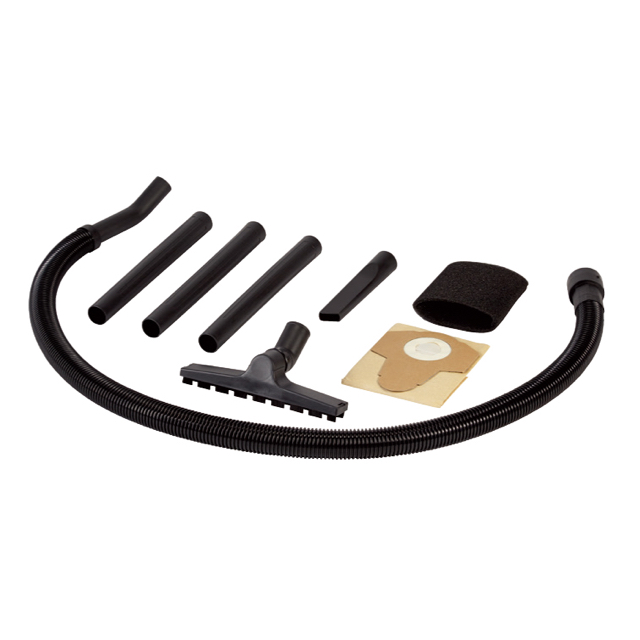
Do not overlook the attachments. A high-quality portable vacuum cleaner must feature anti-static hoses. Friction from fine dust generates static electricity. You will get shocked if the hose lacks proper grounding. The hose must also be crush-resistant. Someone will inevitably step on it in a busy workshop. Finally, look for secure, locking attachment points. Push-fit wands often detach abruptly. Locking tabs prevent frustrating mid-task disconnection.
You now have the knowledge to make an informed choice. Follow this simple framework to finalize your decision. This step-by-step process eliminates unsuitable models quickly. It guides you toward a portable wet dry vacuum that matches your exact needs.
Step 1: Set the Baseline. Filter first by power source. Decide between a battery platform or a traditional wall plug based on your primary location. If you clean cars outdoors, battery power wins. If you work in a dedicated basement shop, a plug makes more sense.
Step 2: Match Specs to Debris. Analyze the primary messes you clean. Ensure adequate Water Lift if you handle wet applications. Heavy mud requires high suction. Conversely, look for high CFM if you manage dry workshop dust. Match the machine's strength to your most frequent problem.
Step 3: Evaluate Long-Term Maintenance. Look closely at the ongoing maintenance requirements. Factor in the availability and replacement frequency of proprietary HEPA filters. Check required battery models if purchasing bare tools. Always review warranty lengths carefully. Look for minimum 1-3 year guarantees to protect your investment. Keep your focus on sustained performance rather than just immediate capabilities.
Choosing the ideal portable unit requires balancing specific spatial constraints with uncompromised sealed suction. You do not have to sacrifice quality for size. Modern compact models deliver exceptional performance. They conquer tight spaces and tackle demanding messes effortlessly. You simply need to look past the marketing hype. Focus on CFM, Water Lift, and filtration integrity instead.
Now is the time to take action. Review your shortlisted models carefully. Check their current battery ecosystem compatibility. Verify the availability of replacement filters before making your final purchase. A well-chosen unit will serve you reliably for years to come.
A: Yes, but only if equipped with a sealed HEPA filter and a pre-filter bag to prevent motor burnout. Fine dust destroys unprotected motors quickly.
A: Yes. You must swap to a foam wet filter. This protects the motor and prevents dangerous mold growth. Wetting a paper filter ruins it permanently.
A: Typically, expect 30 to 60 CFM for ultra-compacts. Full-size units easily exceed 100 CFM. However, a rating of 40+ CFM is entirely sufficient for most targeted portable tasks and small spills.
A: High-end brushless cordless models can definitely match corded suction. However, runtime heavily limits sustained peak performance. You get the same power, but for a much shorter duration.