Views: 0 Author: Site Editor Publish Time: 2026-09-03 Origin: Site
Wood, pellet, and charcoal ash break down into microscopic particulate matter. These tiny specks measure PM2.5 and smaller. Standard household or shop vacuums immediately exhaust these particles back into the room. They also suffer catastrophic motor failure when ingesting such fine debris. Consumers often attempt to clean fireplaces or stoves using this standard equipment. This mistake ruins expensive appliances and compromises indoor air quality. You breathe in the exact soot you tried to eliminate.
Investing in a specialized ash vacuum with HEPA filter is not merely a feature upgrade. It represents a mechanical and health-safety necessity for handling fine combustible dust. Standard filters simply cannot trap the invisible hazards left behind by wood fires. In this guide, we explore the physics of ash filtration. You will learn how proper equipment prevents blowback, protects vacuum motors, and keeps your home air breathable.
True HEPA traps the invisible: Captures 99.97% of particulates down to 0.3 microns, preventing toxic ash from recirculating into your home.
Motor protection equals ROI: Proper fine ash filtration prevents motor burnout, making the appliance a long-term investment rather than a single-season disposable.
Not all HEPA is fire-safe: Ash vacuums require heat-resistant pre-filter systems to protect the primary HEPA filter from hidden embers.
Maintenance is mandatory: A dustless ash vacuum requires specific tapping and cleaning routines to maintain suction power without damaging the pleated filter.
Most consumers fundamentally misunderstand the physical nature of ash. Dirt and breadcrumbs are heavy and irregular. Wood ash behaves more like a fluid gas. When you sweep or vacuum it, it becomes airborne instantly. To understand why standard vacuums fail so spectacularly, we must look at the micron threshold.
Standard vacuum filters utilize porous paper or thin cloth. Manufacturers design them to capture visible dirt, pet hair, and coarse sand. These particles typically measure between 10 and 100 microns. Fireplace soot breaks down much further. It routinely measures below 1 micron. When you suck these microscopic fragments into a standard unit, they pass right through the paper matrix. They travel directly into the motor intake.
Operating incorrect equipment triggers severe mechanical and environmental consequences. Relying on basic filters for fine ash filtration leads to rapid machine death and air contamination. Consider the precise failures you will encounter:
Motor destruction: Ash acts as an aggressive abrasive. It bypasses standard filters and enters the motor housing. The soot binds to lubricating grease on the armatures. It creates a grinding paste. Bearings overheat and seize up, destroying the appliance entirely.
Exhaust blowback: Vacuums rely on aggressive airflow. Because standard filters ignore sub-micron debris, the machine forcibly ejects the soot out of the exhaust port. This creates a lingering dust cloud. It coats your furniture in gray film and heavily irritates the respiratory system.
Sensor degradation: Modern household vacuums use optical dust sensors. Fine soot coats these delicate lenses permanently. Your smart vacuum will constantly report clogs or error codes even when empty.
Many homeowners believe they can outsmart this problem. They rely on the infamous "Shop Vac" myth. They attach a standard drywall filter bag inside a heavy-duty bucket. This approach remains insufficient and highly dangerous. Drywall dust differs chemically and physically from fire soot. More importantly, standard shop vacuums feature plastic canisters and internal plastic baffling. If a hidden ember enters the canister, the high-velocity airflow acts like a blacksmith's bellows. It stokes the ember until the plastic bucket melts or catches fire. You trade a dirty fireplace for a critical household fire hazard.
You cannot compromise on indoor air quality when dealing with combustion byproducts. To stop blowback entirely, you need medical-grade capture capabilities. This brings us to the technical baseline of High-Efficiency Particulate Air (HEPA) standards. A True HEPA filter provides a literal wall against microscopic pollutants. It traps particulates as small as 0.3 microns at a 99.97% efficiency rate. At this microscopic scale, the filter intercepts particles through diffusion and interception, not just basic straining.
The health impact of proper filtration is massive. Wood ash is not benign dust. It contains calcium carbonate, potassium, and trace heavy metals. Inhaling these alkaline particles causes immediate throat irritation. For households managing asthma, COPD, or general respiratory sensitivities, preventing recirculation is a medical necessity. You do not want heavy metals settling on kitchen counters or children's toys.
To safely handle these caustic, abrasive particles, specialized vacuums utilize a highly specific sequence. We call this the Dual-Filter Architecture. You cannot simply stick a HEPA filter into a metal bucket and call it safe. The design must separate the workload to protect both the user and the appliance.
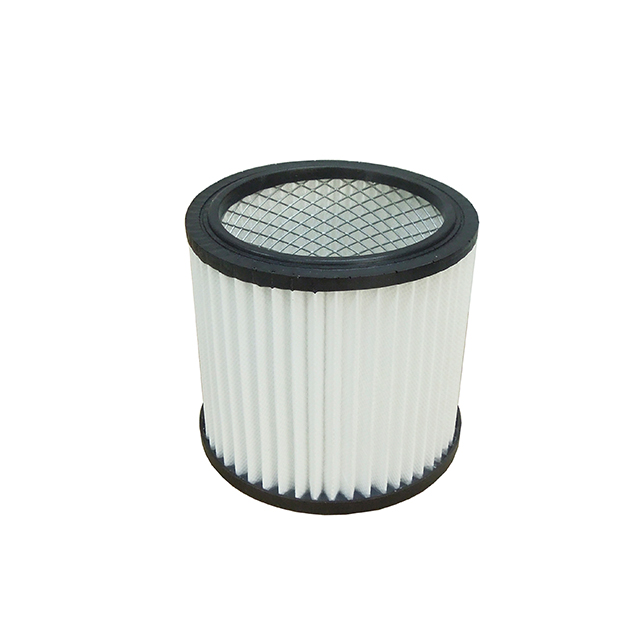
Stage 1: Fire-Resistant Primary Filter: The first line of defense is usually a metal mesh screen or an aluminized fiberglass pouch. As debris enters the canister, this layer catches heavy cinders, unburned wood chunks, and warm embers. It deflects heat away from the sensitive inner layers. This stage handles the bulk of the abrasive load.
Stage 2: The Enclosed HEPA Filter: Once the primary screen blocks the heavy hazards, the microscopic soot continues inward. It meets the pleated HEPA layer. Because the first stage cooled and filtered the large debris, the HEPA membrane can safely trap the microscopic exhaust without catching fire or tearing.
To visualize the sheer difference in capture capabilities, consider this simple summary chart. It illustrates why standard methods inevitably pollute your living room.
Filtration Capability Chart | |||
Particle Type | Size (Microns) | Standard Vacuum Result | True HEPA Result |
|---|---|---|---|
Coarse Sand / Wood Chips | 100+ | Captured | Captured (Stage 1) |
Pet Hair / Household Dust | 10 - 50 | Captured | Captured (Stage 1) |
Drywall Dust / Heavy Soot | 1 - 5 | Partial Blowback | Captured (Stage 2) |
Combustion Smoke / Fine Ash | 0.3 - 0.9 | Total Blowback (Exhausted) | Captured (Stage 2) |
Knowing the science is only half the battle. You must evaluate specific mechanical features when selecting the right appliance. The market is flooded with deceptive terminology. If you buy the wrong unit, you will still experience air leaks and clogs.
First, you must understand the difference between True HEPA and "HEPA-Type." Manufacturers love to use marketing jargon. "HEPA-like," "HEPA-style," or "99% efficient" labels mean the filter failed independent certification. These knock-offs let dangerous amounts of microscopic soot through. You must demand an authentic HEPA ash vacuum. Look for independent ratings. Check for H13 or H14 medical-grade standards. If the spec sheet lacks the exact "99.97% at 0.3 microns" phrasing, look elsewhere.
Second, evaluate the thermal protection integration. Pure HEPA material usually consists of woven fiberglass or synthetic polymers. These materials are highly flammable. An exposed HEPA filter inside a metal bucket creates a serious fire hazard. Always evaluate models that encase the delicate pleated filter behind an aluminized or flame-retardant pre-filter. This thermal shield buys you critical seconds if you accidentally ingest a live coal.
Third, scrutinize the sealed system engineering. A world-class filter is completely useless if the vacuum canister leaks air. Air takes the path of least resistance. If the lid does not seal perfectly, the vacuum motor will pull air through the gaps instead of through the filter. Look for heavy-duty rubber gasket seals. Check for thick metal clamping mechanisms. Plastic clips warp under heat and eventually break, destroying the airtight seal.
Finally, prioritize agitator and filter-clearing mechanisms. Ash blinds fine filters incredibly fast. "Blinding" occurs when microscopic soot coats the pleated surface completely, choking off all airflow. Your motor will whine, and suction will drop to zero. Instead of forcing you to open the canister and create a mess, premium models feature external agitators. These external buttons or levers knock the dust off the inner filter. You simply pump the lever a few times, the soot drops into the bucket, and your suction returns instantly.
Common Mistake: Buying a unit solely based on horsepower.
Best Practice: Prioritize Airflow (CFM) and Water Lift metrics over peak horsepower. A well-sealed HEPA system needs high static pressure to pull air through dense filter media.
Common Mistake: Ignoring the hose material.
Best Practice: Ensure the hose is metal-lined or constructed entirely of flexible aluminum. Plastic hoses melt instantly upon contact with warm cinders.
Having the best equipment provides maximum safety. However, this safety requires strict upkeep. You must manage realistic expectations regarding suction. Because HEPA layers are incredibly dense, they naturally restrict airflow. When soot hits this dense layer, CFM (cubic feet per minute) drops rapidly. Proper maintenance keeps the machine functioning properly.
Understanding proper ash vacuum filter care prevents premature breakdowns. Many homeowners ruin their expensive filters on the very first day. Follow these specific rules to protect your investment.
Never vacuum hot ash. This is the golden rule of fireplace maintenance. Even if your equipment features a metal canister and heat-resistant pre-filters, the internal HEPA membranes remain sensitive to heat deformation. Extreme temperatures will warp the microscopic glass fibers. They stretch and tear. Once the membrane tears, the 0.3-micron rating disappears forever. You must allow your stove or fireplace 12 to 24 hours of cooling time before cleaning.
You must also commit to dry cleaning only. A standard mistake involves running a dirty filter under the kitchen sink. Unless the manufacturer specifically rates the filter as washable, water destroys it. Water causes the fine ash to turn into a cement-like slurry. This slurry dries inside the microscopic pores, permanently bricking the filter. Water also degrades the delicate micro-glass fiber layout.
Instead of water, rely on the "Tap and Brush" method. This is the safest way to dislodge caked-on soot. Take the filter outside. Place it inside a large trash bag to contain the mess. Gently tap the plastic rim of the filter against a solid surface. The shockwaves will dislodge the heavy crust. Next, use a soft-bristled brush to gently sweep between the pleats. Do not use compressed air. High-velocity air compressors easily blow holes right through the delicate filter paper.
Establish a strict replacement cadence. You cannot keep the same filter forever, no matter how carefully you brush it. Microscopic particles eventually embed themselves permanently into the matrix. Guidelines suggest replacing the primary HEPA filter every 6 to 12 months. Your specific timeline depends heavily on your frequency of use and fuel type. Softwoods produce more creosote and sticky soot, requiring faster replacement cycles than clean-burning hardwood pellets.
A True HEPA filter effectively transforms a basic metal ash bucket into a safe, health-compliant household appliance. It stops abrasive particles from destroying expensive motors. More importantly, it keeps toxic combustion byproducts out of your living space.
As you move forward, keep your shortlisting logic simple. When comparing different models, always rank them by three non-negotiable criteria. First, verify the True HEPA certification (H13/H14). Second, demand heat-resistant pre-filtration to shield the flammable core. Third, evaluate the ease of filter maintenance, prioritizing external agitators. By following these mechanical rules, you guarantee clean air, a clean hearth, and an appliance that lasts for years.
A: No. Standard HEPA vacuums feature plastic canisters and non-fire-resistant components. They easily melt or ignite if a hidden ember is ingested. Furthermore, standard household units lack the dual-stage pre-filtration required to stop heavy soot from instantly blinding the HEPA layer, leading to immediate motor overheating.
A: Ash vacuums feature fire-resistant metal canisters, metal-lined hoses, and specialized fine ash filtration. Engineers design them to handle abrasive, potentially warm materials safely. Standard shop vacs use plastic bodies, plastic hoses, and porous filters that easily melt, catch fire, or exhaust toxic dust straight back into your room.
A: You should clear the surface dust via the external agitator after every single use. A deep manual cleaning (tapping out the filter outdoors) is recommended after every 3-4 heavy uses. This routine maintains peak CFM suction and ensures a truly dustless ash vacuum experience without stressing the motor.